
How to Find Students for Home Tuition in Pakistan
IlmGhar Team · 3 Jul 2026
Tuition demand in Pakistan is huge — but many good tutors still struggle to find regular students. Here are seven proven ways to reach parents, build trust, and keep the students you win.

Many tutors in Pakistan know their subject well, but still struggle to find regular students.
Some wait for relatives to recommend them. Some depend on tuition academies. Some post in Facebook and WhatsApp groups. Some pay registration fees to agencies and then get no serious leads. The problem is not always teaching ability. Many good tutors simply do not know where to find genuine students or how to build trust with parents.
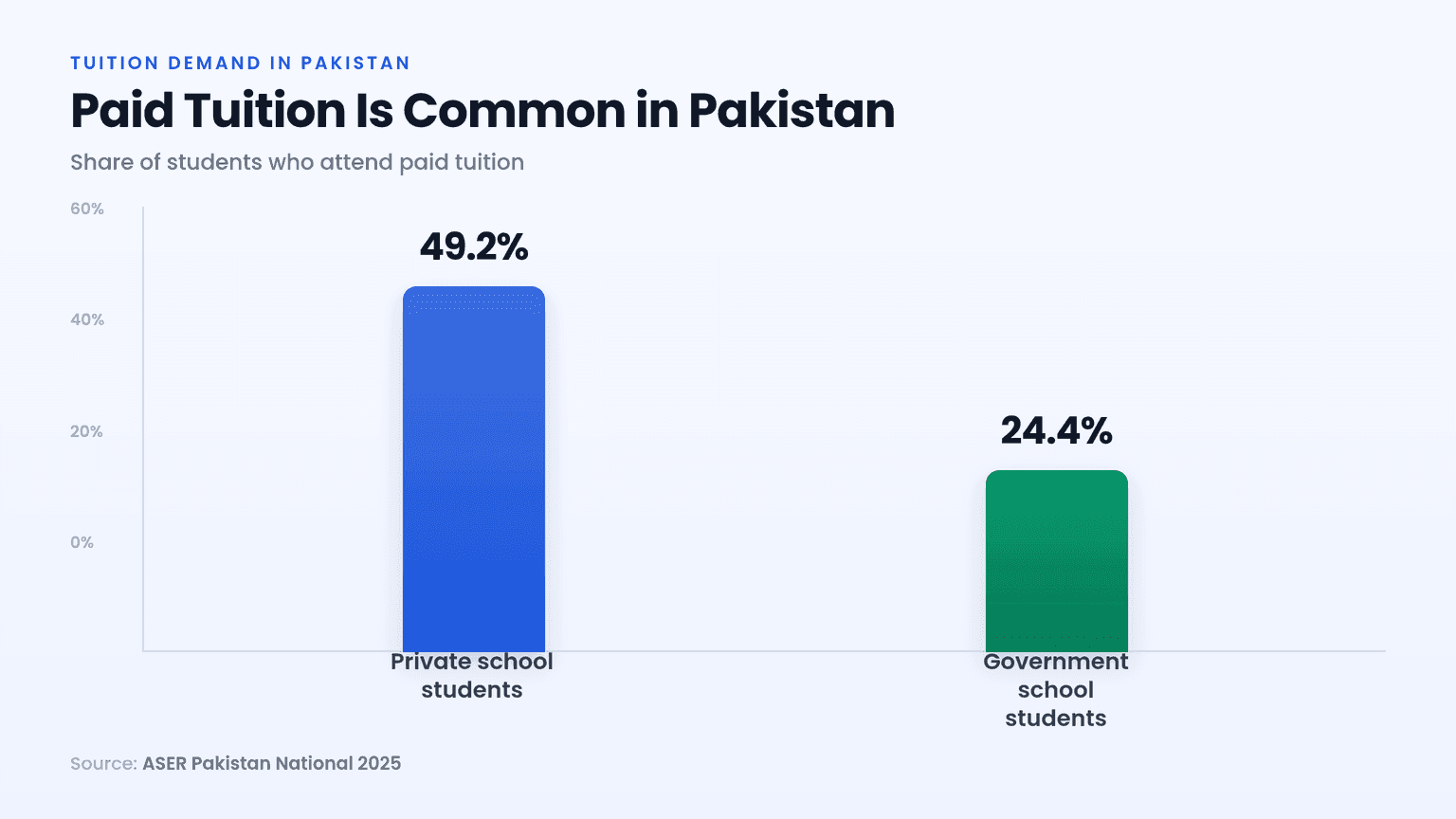
The demand is there. ASER Pakistan National 2025 reports that 49.2% of private school students and 24.4% of government school students attend paid tuition. In government schools, paid tuition rises from 17.2% in class 1 to 36.4% in class 10, which shows how demand increases as students move closer to board exams. Source: ASER Pakistan National 2025
There is also serious money involved. Pakistan Observer, reporting on I-SAPS public financing data, says household spending on education reached Rs 2.8 trillion, including Rs 613 billion on shadow education and tuition. Source: Pakistan Observer
So the question is not whether tuition demand exists. It clearly does.
The real question is:
How can tutors reach the right parents and turn that demand into regular students?
Where to Find Students for Home Tuition
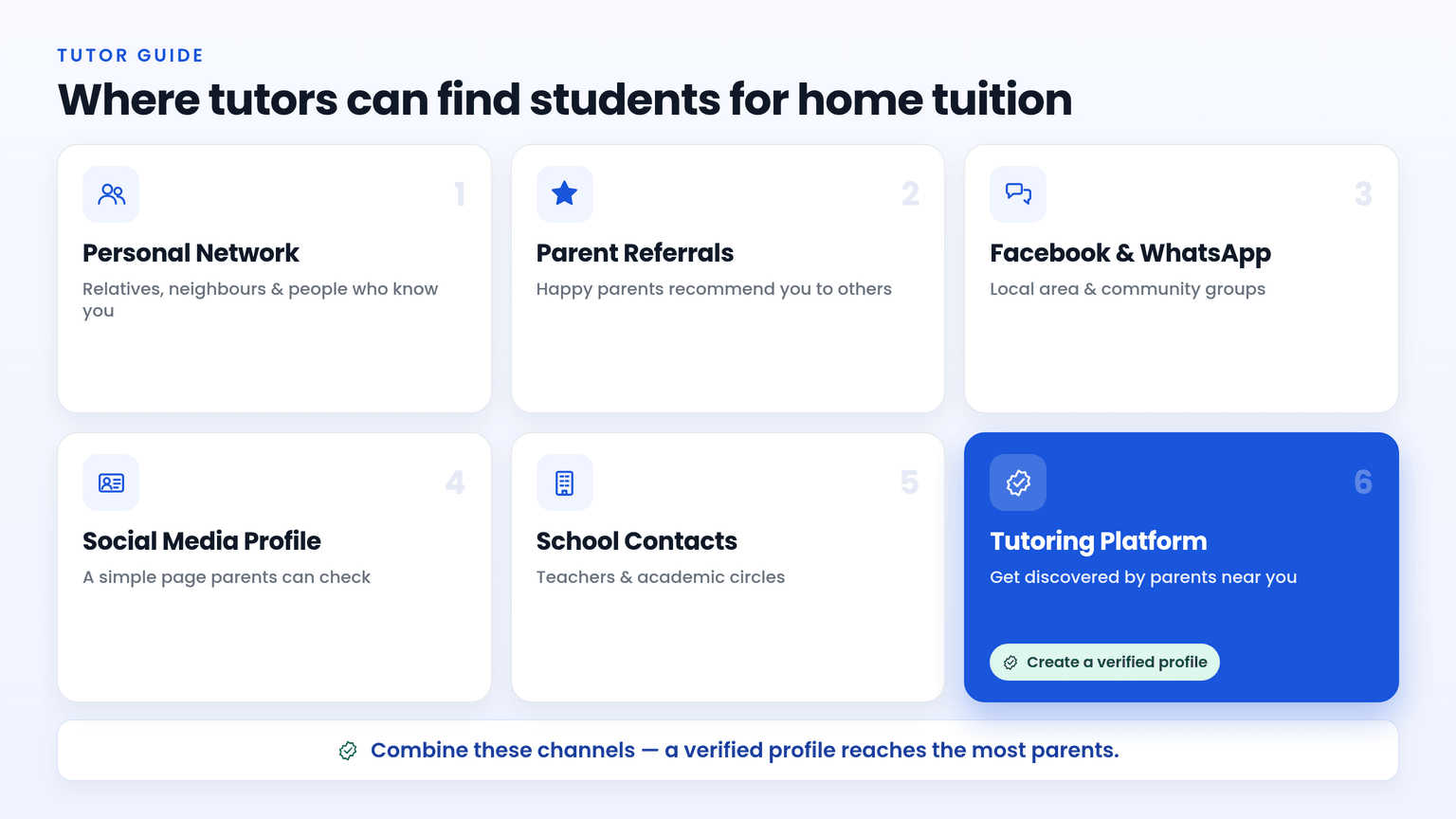
Finding students is not about using one method only. A tutor should use several channels at the same time. Some channels build trust. Some bring visibility. Some bring fast leads. Some help build long-term reputation.
The best approach is to combine them.
1. Start With Your Personal Network
Your first students often come from people who already know you.
This includes relatives, neighbours, family friends, university classmates, former teachers, colleagues, mosque or community contacts, and parents in your area. These people may not need tuition themselves, but they may know someone who does.
This works because tuition is based on trust. Parents are more comfortable hiring someone who comes through a known person.
But many tutors make one mistake. They assume people already know they teach. Usually, they do not.
You need to tell people clearly:
- which subjects you teach;
- which classes you teach;
- whether you offer home tuition, online tuition, or both;
- which areas you can visit;
- whether you teach school, matric, FSc, O Level, A Level, or entry-test students.
Do not just say, “I give tuition.” Say something specific.
For example:
I teach Maths and Physics for classes 8 to 10 in Islamabad. I am available for home tuition in nearby areas and online classes as well.
| Pros | Cons |
|---|---|
| High trust because people already know you | Limited reach |
| Good for getting your first student | Depends on referrals |
| Parents feel safer with a known contact | May not bring regular leads |
| No advertising cost | Can be slow in the beginning |
Personal network is a good starting point, but it should not be your only method. If you depend only on relatives and friends, your growth will be limited.
2. Ask for Referrals From Existing Students
If you already teach even one student, that student’s family can help you find more students.
Many tutors feel shy about asking for referrals, but there is nothing wrong with it if you ask politely. Parents often know other parents with similar problems. If they are happy with your teaching, they may recommend you.
The right time to ask is after you have shown some value. For example, after one month of regular classes, after improved test marks, or after the parent gives positive feedback.
You can say:
If you know another student who needs help in Maths or Science, you can share my number with them.
Do not pressure parents. Just make it easy for them to recommend you.
| Pros | Cons |
|---|---|
| Strong trust because recommendation comes from a parent | Only works after you already have students |
| Better quality leads | Slow growth if you have few students |
| No marketing cost | Depends on parent satisfaction |
| Helps build reputation | One bad experience can affect referrals |
Referrals are powerful because they come with built-in trust. A tutor who keeps parents happy can slowly build a stable tuition network through referrals alone.
3. Use Facebook and WhatsApp Groups Carefully
Social media can help tutors find students, but only if used properly.
Many tutors join Facebook groups and WhatsApp groups, then post the same message again and again:
Tutor available. Inbox me.
This usually does not work.
Parents need details. They want to know who you are, what you teach, where you teach, and whether you are serious.
A better post would be:
Home tutor available in Islamabad for classes 6 to 10. Subjects: Maths, Physics, and Computer Science. Experience with FBISE syllabus. Home tuition available in selected areas. Online classes also available. Trial class can be discussed.
This is clear. It tells parents what you offer.
You can use:
- local Facebook groups;
- parenting groups;
- area-based WhatsApp groups;
- school community groups;
- university groups;
- local community pages.
But be careful. Do not spam. Do not copy-paste the same message everywhere every day. That makes you look unprofessional.
| Pros | Cons |
|---|---|
| Free and easy to start | Many unserious leads |
| Can reach parents in your area | Hard to build trust |
| Good for urgent tuition posts | Too much competition |
| Useful for online tuition too | Risk of scams and fake profiles |
| Helps you test demand | Can look unprofessional if overused |
Social media works best when your profile also looks trustworthy. Use your real name, a decent profile photo, clear subject list, and professional language.
4. Build a Simple Social Media Presence
This is different from posting in groups.
A tutor should have at least one simple online presence that parents can check. It does not have to be fancy. You do not need to become an influencer. You just need to look real, serious, and reliable.
You can create:
- a Facebook page;
- a LinkedIn profile;
- a WhatsApp Business profile;
- a simple Instagram page;
- short educational posts;
- short teaching clips;
- a pinned post with subjects, classes, areas, and contact details.
For example, a WhatsApp Business profile can include:
| Profile Item | What to Add |
|---|---|
| Name | Your real name |
| About | Home and online tutor for Maths and Science |
| Location | City or areas you teach in |
| Services | Subjects and classes |
| Timing | Available slots |
| Catalogue | Subjects or packages |
| Status updates | Helpful study tips or availability |
This helps because parents often check your profile before contacting you. If your profile is empty, confusing, or too casual, they may not take you seriously.
| Pros | Cons |
|---|---|
| Builds long-term credibility | Takes time |
| Parents can check your details easily | Needs consistency |
| Good for online and home tuition | Does not bring instant results |
| Helps you look professional | Poor content can hurt image |
| Can collect reviews and testimonials | Needs basic communication skills |
Social media should support your reputation. It should not be your only source of students.
5. Contact Schools, Colleges, and Teachers
Schools and colleges can be useful, but this method needs professionalism.
You can stay connected with former teachers, school staff, college contacts, and classmates who are now teaching. Sometimes teachers know students who need extra help but cannot personally take tuition.
You can also offer exam revision help near test season, especially for board classes.
But do not pressure school staff. Do not ask teachers to promote you in a way that creates problems for them. Some schools do not allow teachers or staff to recommend private tutors openly.
A better approach is to build your reputation slowly.
For example:
- help juniors with difficult topics;
- share useful notes with students;
- offer a short revision session;
- stay active in academic circles;
- let people know your subject clearly.
| Pros | Cons |
|---|---|
| Relevant leads | Not always allowed |
| Good for board students | Can be slow |
| Teachers understand student needs | Depends on relationships |
| Helps build academic reputation | Limited reach |
| Strong subject-based referrals | Must be handled professionally |
This method works best for tutors who are known for one subject or one board.
6. Register on Tutoring Platforms
Many tutors are good at teaching but not good at marketing. This is where tutoring platforms can help.
A tutoring platform gives tutors a place to show their profile, subjects, class levels, area, teaching mode, and verification details. Parents can then search and compare tutors more easily.
This is where IlmGhar fits naturally.
IlmGhar helps tutors create a proper profile and become visible to parents looking for home and online tuition. A tutor can show what they teach, where they can teach, and whether they offer home tuition, online tuition, or both. Verification also helps build trust because parents are more careful when hiring someone for home tuition.
A complete tutor profile is much stronger than a random WhatsApp message.
| Pros | Cons |
|---|---|
| Parents are already looking for tutors | You still need a strong profile |
| Better trust through verification | Leads may depend on area and subject demand |
| Easier to show subjects and experience | Competition with other tutors |
| Good for home and online tuition | You still need to respond professionally |
| More structured than random groups | Profile quality matters |
A tutoring platform does not remove the need for effort. You still need to write a clear profile, respond properly, take trial classes seriously, and teach well. But it gives you a better starting point than waiting for random referrals.
7. Offer Both Home and Online Tuition
Tutors who offer both home and online tuition have more chances to find students.
Home tuition is useful for students who need personal attention, especially younger children and students with weak basics. Parents also prefer home tuition when they want someone to check notebooks, supervise homework, and build routine.
Online tuition is useful when students live far away, need flexible timing, or want a subject specialist who is not available nearby.
| Tuition Type | Best For | Tutor Advantage |
|---|---|---|
| Home tuition | Younger students, weak basics, routine building | Stronger parent trust and personal attention |
| Online tuition | Older students, O Level, A Level, entry tests, language learning | Wider reach and flexible timing |
| Hybrid tuition | Students needing both personal support and flexibility | More options and better continuity |
If you only offer home tuition, your reach is limited by location. If you only offer online tuition, some parents may hesitate for younger children. Offering both gives you more flexibility.
How to Build Your Reputation as a Reliable Tutor
Finding students once is not enough. If you want regular tuition work, you need reputation.
Parents do not only hire tutors for knowledge. They hire tutors because they trust them.
Be Clear About What You Teach
Do not claim everything.
Many tutors write “all subjects, all classes.” This may sound flexible, but it can also sound weak. Parents trust tutors who are specific.
Better examples:
- Maths for classes 6 to 10;
- Physics for matric and FSc;
- English grammar and writing for school students;
- O Level Chemistry;
- Primary school all subjects;
- Computer Science for FBISE and Punjab Board.
Specificity builds confidence.
A parent looking for class 9 Maths will trust a tutor who clearly says “class 9 and 10 Maths” more than someone who says “all subjects available.”
Create a Strong Tutor Profile
Your profile should answer the parent’s basic questions before they ask.
| Profile Detail | Why It Matters |
|---|---|
| Full name | Builds basic trust |
| Qualification | Shows academic background |
| Subjects | Helps parents match needs |
| Classes | Shows level suitability |
| Boards | Shows syllabus familiarity |
| Area | Helps with home tuition |
| Teaching mode | Home, online, or both |
| Experience | Builds confidence |
| Verification | Makes parents feel safer |
A weak profile creates doubt. A strong profile makes it easier for parents to contact you.
Be Professional From the First Message
Parents judge tutors from the first interaction.
If your message is unclear, too casual, or careless, parents may not continue. Reply politely. Use proper language. Ask about the student’s class, subject, board, weak areas, and location.
Do not start by arguing about fee. First understand the need.
A good first response could be:
Thank you for contacting me. Please share the student’s class, subject, board, area, and current difficulty. Then I can guide you properly about tuition mode, timing, and fee.
This sounds professional.
Avoid Registration Fee Traps and Fake Agencies
Tutors should be careful with agencies or pages that ask for upfront registration fees and promise guaranteed students.
Some may be genuine, but many are not. A serious tutor should not blindly pay every person who claims they can provide tuition leads.
Before paying anyone, ask:
- Is the platform known?
- Is there a clear process?
- Are there real parent requests?
- Are tutor profiles visible?
- Is there support?
- Are the terms clear?
A tutor should invest in skill, profile, and reputation. Do not depend on shortcuts.
Collect Reviews and Referrals
Reviews matter because parents trust other parents.
After you teach a student for some time, ask for simple feedback. If the parent is happy, ask if they can share a short review or refer you to another family.
You can keep testimonials simple:
My child improved in Maths and became more confident.
Or:
The tutor is punctual and explains concepts clearly.
These small reviews help build trust.
How to Keep Students Once You Have Them
Getting a student is one thing. Keeping a student is another.
A tutor who wants steady income should focus on retention. Parents continue tuition when they see seriousness, progress, and reliability.
Start With a Learning Check
Do not start blindly from the next chapter.
In the first few classes, check:
- current class level;
- weak concepts;
- school test performance;
- homework habits;
- exam dates;
- parent expectations;
- student confidence.
This helps you teach better and also shows parents that you are serious.
Give Parents Regular Updates
Parents do not need long reports every day, but they do need updates.
You can update weekly or after every few classes:
- what was covered;
- what is still weak;
- what the student should practise;
- whether the child is improving;
- what you will do next.
This builds trust. Parents should not feel confused about what is happening in tuition.
Be Punctual and Consistent
Punctuality is a big part of professionalism.
A tutor who keeps changing time loses trust. If you cannot attend a class, inform early. Offer a makeup class. Respect the family’s schedule.
Parents may forgive one genuine issue. They will not continue with a tutor who is careless with time.
Focus on Concepts, Not Just Homework
Tutors who only complete homework are easy to replace.
Tutors who improve understanding become valuable.
If a child keeps making the same mistake, do not just correct the answer. Find the weak concept behind it. If the student cannot solve word problems, check whether the issue is maths or reading. If the student memorises science but cannot explain it, slow down and build understanding.
Parents notice when their child starts understanding better.
Help the Student Feel Confident
Many students are not lazy. They are confused, scared, or embarrassed.
A good tutor creates a space where the child can ask questions without fear. Small improvements matter. A student who starts saying “I can do this” is more likely to continue learning.
Confidence is one of the biggest reasons parents keep a tutor.
Keep Boundaries Professional
Home tuition needs professional boundaries.
Communicate mainly with parents for younger students. Avoid unnecessary personal chatting. Keep timing clear. Do not discuss unrelated personal matters. Respect the home environment.
Professional boundaries protect both the tutor and the family.
Final Thoughts
Finding students for home tuition in Pakistan is not only about posting in groups or waiting for academy calls. It is about becoming visible, trustworthy, and reliable.
Demand exists. Parents are already spending on tuition. Many students need help. But parents do not only want someone who knows the subject. They want someone they can trust with their child’s learning.
A tutor who builds a clear profile, uses the right platforms, communicates professionally, teaches with patience, and keeps parents updated will always have a better chance of getting and keeping students.
For tutors, IlmGhar can become a practical way to reach parents looking for home and online tuition, build a verified profile, and grow tuition work without depending only on random referrals or social media posts.
Related posts
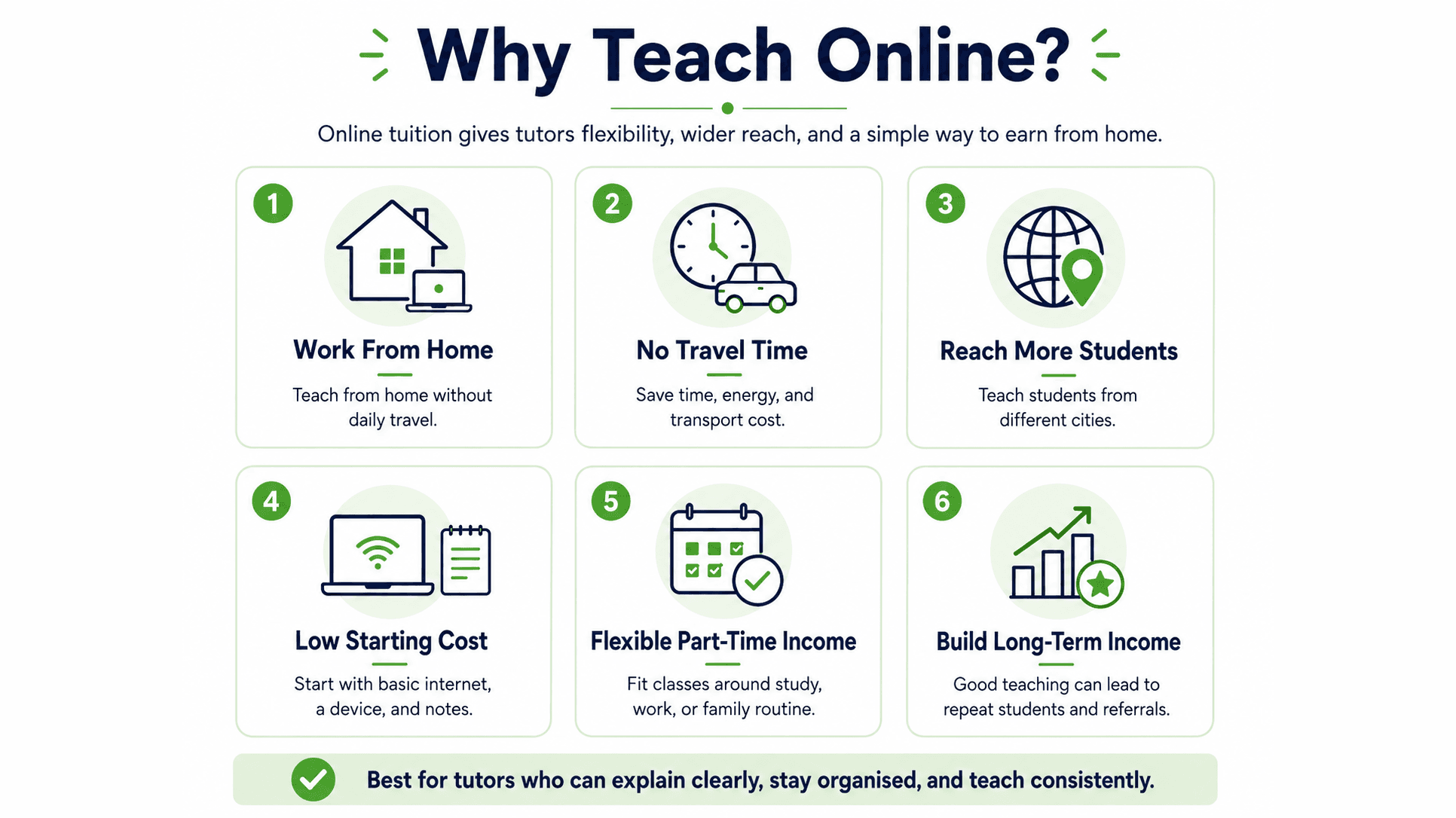
Online Tuition Jobs in Pakistan: How to Start Teaching Online
A practical guide to online tuition jobs in Pakistan: why teach online, how to find students, who should teach, and the equipment and best practices to get started.
IlmGhar Team · 14 Jul 2026

Online Tutor vs Home Tutor: Which Is Better for Your Child?
The first tuition decision isn't fee or subject — it's online vs in-person. Here's how to choose the right format for your child by age, subject, weak basics, routine and focus.
IlmGhar Team · 8 Jul 2026

Home Tutors Near Me: Where Can You Find Them?
From word of mouth and school contacts to Facebook groups, Google and tutoring platforms — here are the real ways to find a home tutor near you in Pakistan, and how to choose one you can trust.
IlmGhar Team · 3 Jul 2026
Looking for a verified tutor?
Browse admin-verified home tutors anywhere in Pakistan and hire with confidence.